Writing a Kubernetes Operator from scratch: PodSet Operator(ReplicaSet controller)
Background
Kubernetes lets you define your own Resources/Objects on top of the built-in ones like Deployment, StatefulSet, Pod and Service. Once you have a CustomResourceDefinition, the next question is always: how do you make that resource actually do something? That’s where the Operator pattern comes in - a controller that watches your custom resource and drives the cluster towards the state you declared.
There’s plenty of high-level material explaining what an operator is, but far less that walks through building one from nothing - scaffolding, generating clientsets, writing the reconcile loop, and eventually graduating to shared informers and workqueues. So I put together PodSet Operator, a small, deliberately educational operator, to fill that gap.
You can find the full project at https://github.com/hrishin/podset-operator.
What is a PodSet?
PodSet is a toy custom resource, similar in spirit to a ReplicaSet, but stripped down to the bare essentials so the controller logic stays easy to follow. You declare how many pods you want:
apiVersion: demo.k8s.io/v1alpha1
kind: PodSet
metadata:
  name: three-podset
spec:
  replicas: 3
Apply it, and the controller creates the requested number of pods. Delete pods out-of-band, and the controller reconciles the count back to what’s declared in spec.replicas. Simple to describe, but implementing it properly touches almost everything you need to know to write a real operator.
Learning path
Rather than dumping a finished controller, the repo is broken into branches (step-1 through step-5) that build up incrementally:
- Step 1 - Basic project scaffolding and code structure.
-
Step 2 - Defining the
PodSetCRD types, registering the CRD, and generating client APIs usingclient-goand the Kubernetes code generators (deepcopy-gen,client-gen,informer-gen,lister-gen). -
Step 3 - A functional controller demonstrating
watchrequests and a basic reconciliation loop. -
Step 4 - A production-pattern controller using shared informers, listers, and workqueues - the same building blocks
kube-controller-manageritself is built from. - Step 5 - The same production-pattern controller rebuilt on kubebuilder, which scaffolds the informers, listers, and workqueue wiring for you.
Each step is meant to be checked out and read on its own, so you can see exactly what changes (and why) as the controller matures from “watch and react” to something closer to what you’d actually run in production.
The project borrows heavily from the Kubernetes sample-controller and from Programming Kubernetes by Stefan Schimanski and Michael Hausenblas - both excellent references if you want to go deeper after working through this.
Disclaimer: this codebase optimizes for educational value, not production-readiness. Error handling, edge cases and testing are deliberately kept light so the core controller pattern stays visible.
Why I built this
Importance of the mechanics and curiosity: what a shared informer actually buys you over a naive watch, why you need a workqueue instead of reacting to events inline, and how generated clientsets/listers fit together with your own reconcile code. Stepping through that incrementally, step by step, made those pieces click in a way that reading a finished, fully-loaded controller never did for me.
I’ve since used this material to run hands-on sessions for engineers at both Red Hat, DRW and JP Morgan at work, walking through the same steps, and it’s also formed the basis of a couple of community talks at the Kubernetes India Meetup. It’s been a good way to take people from “I’ve used kubectl apply on a CRD” to “I understand what my controller is actually doing when it wakes up.”
If you’re getting started with writing your own operator, clone the repo, check out step-1, and work your way up. Happy to hear feedback or questions from anyone working through it.
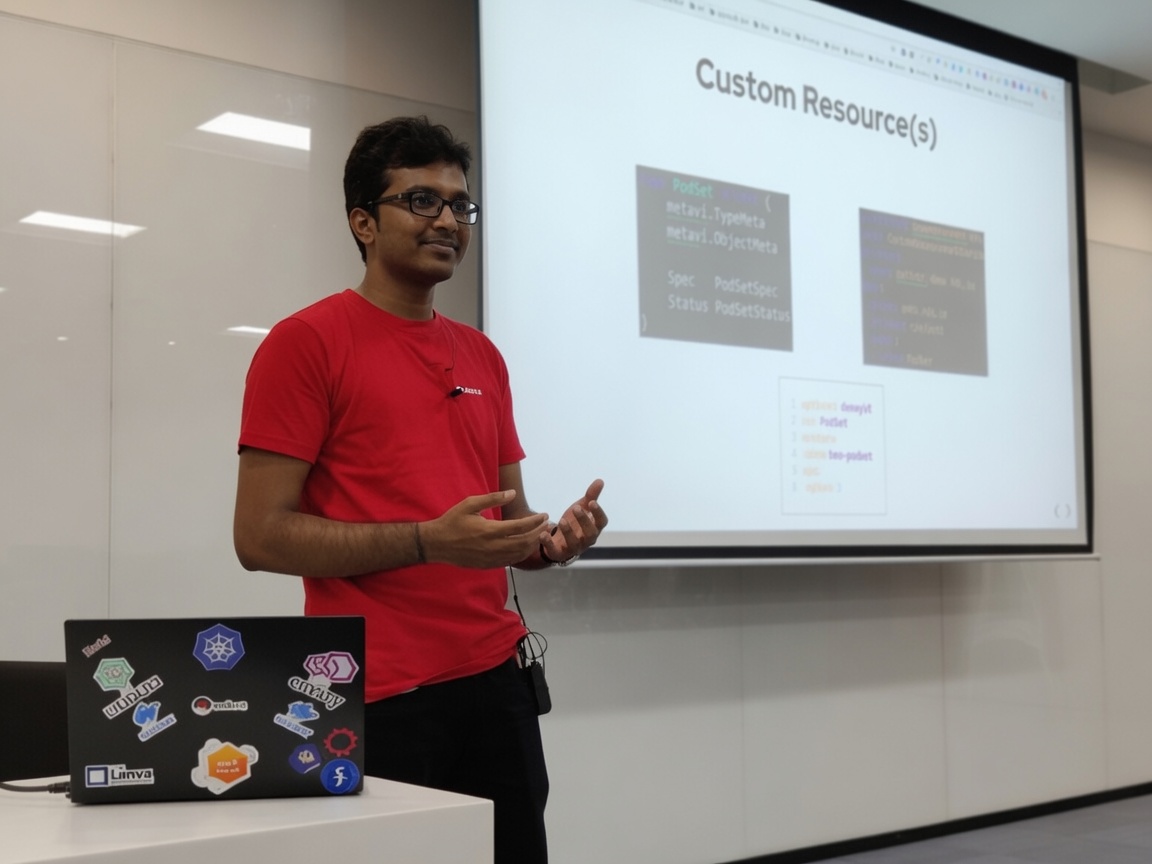
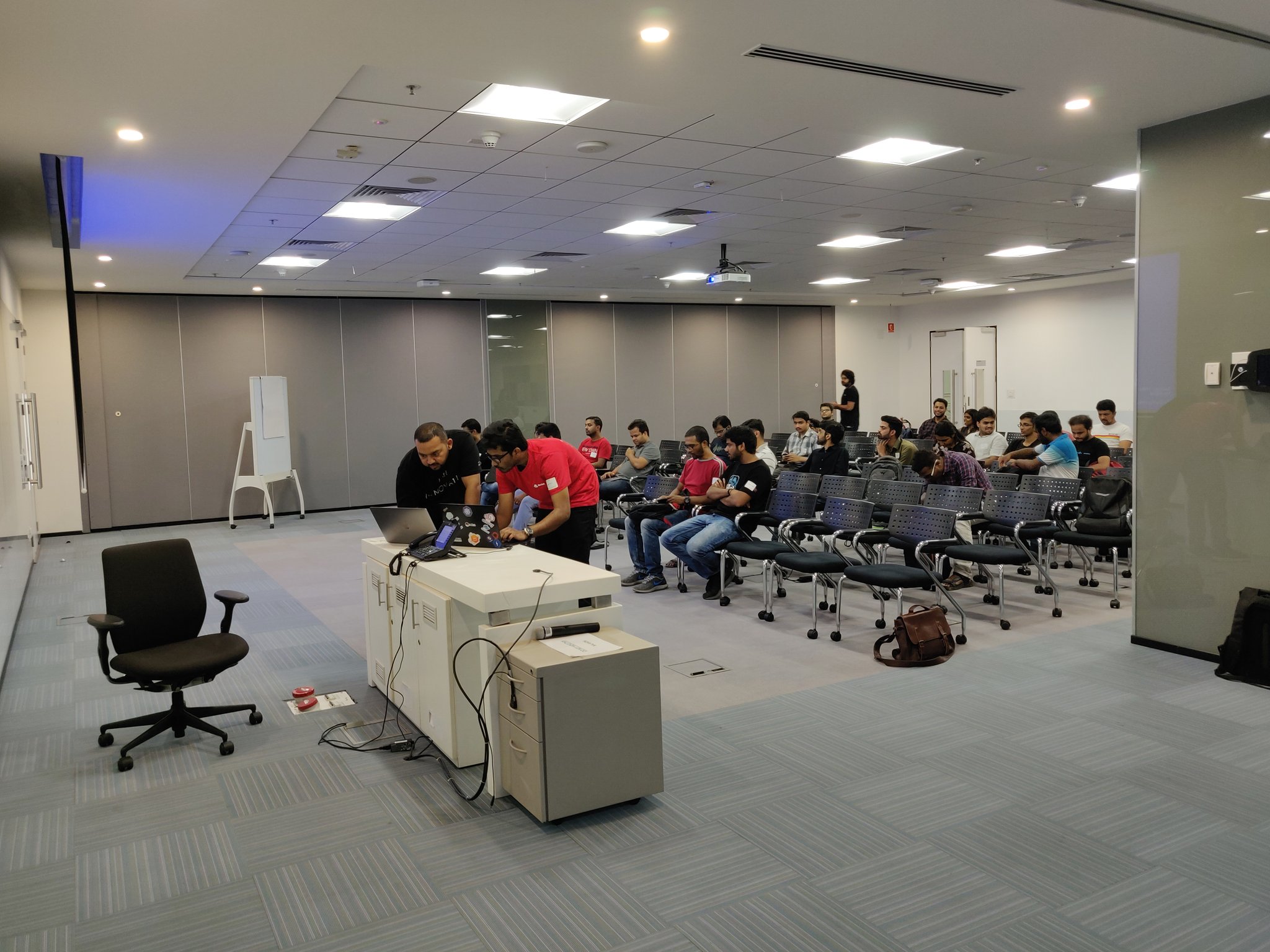
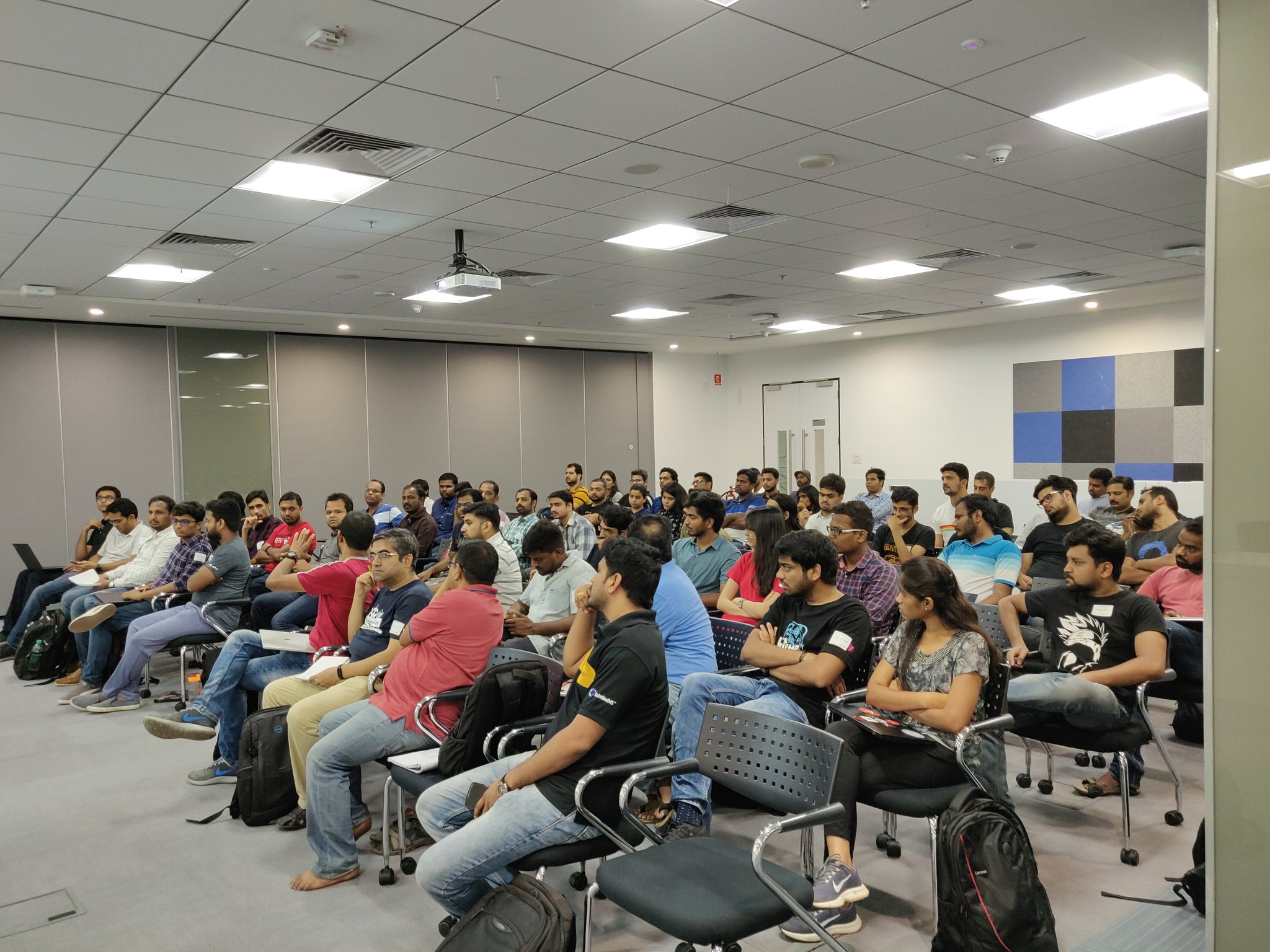
Photo courtesy of friends at K8SBLR.